
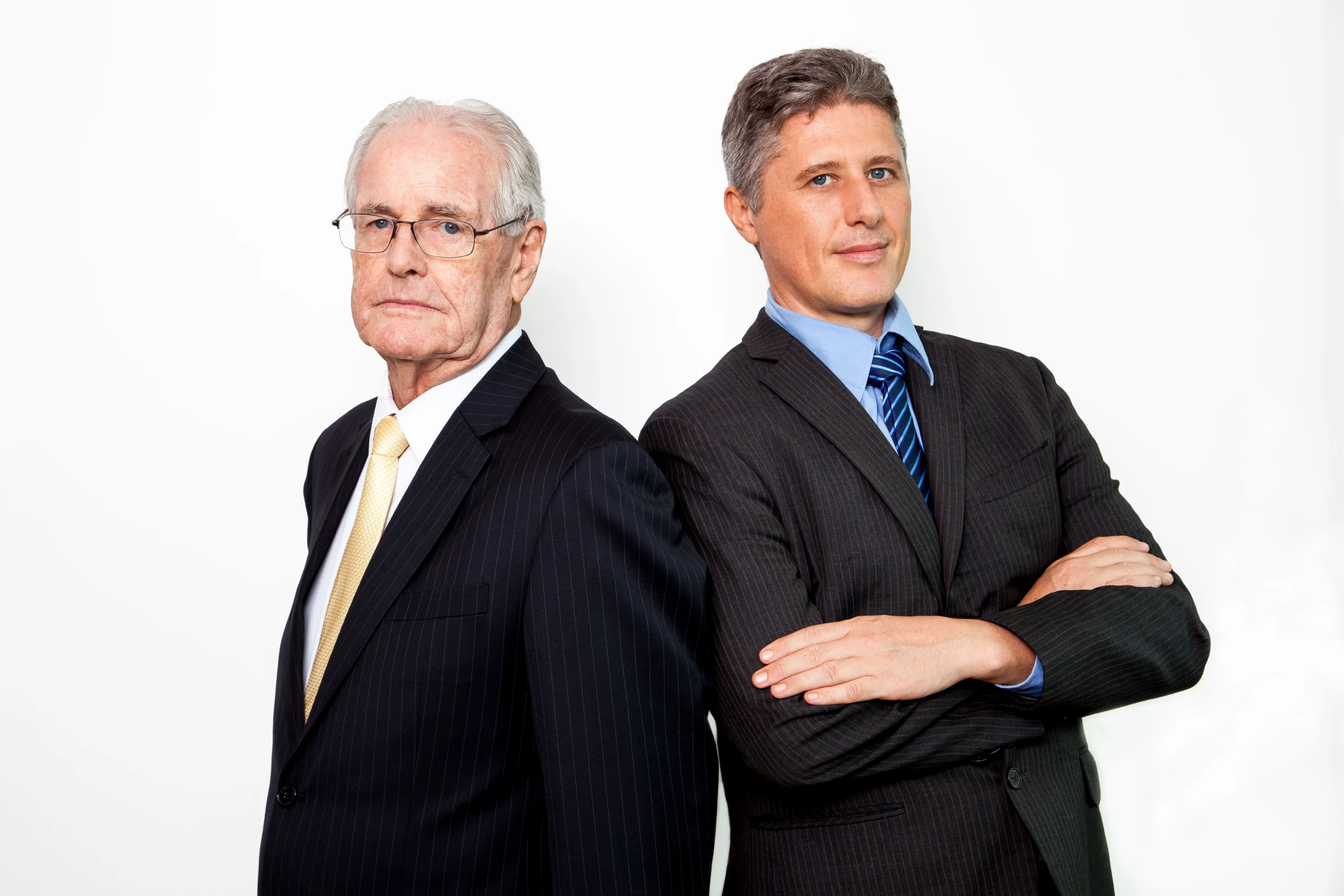
Building a company often begins with a founder who wears almost every hat: strategist, marketer, salesperson, product builder and leader. In the early stages, this all-in-one approach can be essential. But as the company grows, the difference between a founder and a CEO becomes more pronounced.
Many successful companies eventually reach a point where the skills required to start a business are not the same skills required to scale it. That can lead to an important question: Should the founder remain CEO, or should the leadership structure evolve?
Understanding the founder vs CEO transition is an important part of building a company that can grow without becoming dependent on one individual. The answer is not always to replace the founder. In many cases, the founder can evolve into a more strategic CEO by delegating operational responsibility and building a stronger executive team.
This guide explains the difference between a founder and a CEO, the signs that a leadership model may need to change, and how founders can transition from hands-on management to scalable leadership.
Founder and CEO are often the same person in an early-stage company, but they describe different roles.
A founder is the person who creates the business and is typically closely involved in its original vision, product, customers and culture.
A CEO, meanwhile, is responsible for leading the organisation as a whole. As the business becomes more complex, the CEO’s responsibilities typically include:
The distinction does not mean that founders cannot become effective CEOs. Many founders remain CEOs as their companies grow. The challenge is that the role often needs to evolve from doing the work personally to creating the conditions in which other leaders can do it effectively.
There is no universal point at which a founder should stop being CEO. However, certain patterns can indicate that the existing leadership structure is no longer keeping pace with the business.
A company that once had a small team and straightforward operations can eventually develop multiple departments, international activities, more complex financial requirements and a larger management structure.
At that point, attempting to remain involved in every operational decision can become impractical.
The founder may need to move from managing individual tasks to designing the systems and leadership structure that manage those tasks.
The issue is not simply company size. It is whether the complexity of the organisation has outgrown the way leadership decisions are currently made.
Founder dependency can become a significant operational bottleneck.
If employees regularly wait for the founder’s approval before making routine decisions, the organisation can struggle to move at the pace required for growth.
Common signs include:
The solution is not necessarily to remove the founder from decision-making. Instead, founders can define which decisions require their involvement and which should be owned by other leaders.
Clear decision rights become increasingly important as an organisation grows.
Founders often begin by spending most of their time on vision, customers, product development and growth.
As the organisation becomes more complicated, that can change.
The founder’s calendar may increasingly be filled with:
When operational issues consistently consume the time needed for long-term strategy, the leadership model may need to change.
Delegating operational responsibility can allow the founder to spend more time on areas where their knowledge and relationships provide the greatest value, such as strategy, product direction, major partnerships or business development.
No founder can be an expert in every function required by a growing organisation.
A scaling business may need deeper expertise in areas such as:
The appropriate response may be to hire full-time executives, develop existing managers or use experienced external support while the company determines its longer-term requirements.
The important question is not whether the founder personally possesses every capability. It is whether the leadership team collectively has the capabilities the business now requires.
Major growth, fundraising, strategic transactions, changes in ownership, increased governance requirements or a significant increase in organisational complexity can prompt founders, boards or investors to reconsider the existing leadership structure.
That does not automatically mean the founder should be replaced.
Instead, stakeholders may consider whether the existing executive team has the experience, authority and capacity required for the next stage of the business.
In some cases, the answer will be to strengthen the existing team. In others, it may involve bringing in a new executive, changing the founder’s responsibilities or eventually appointing a different CEO.

Not necessarily.
A founder can remain CEO while changing how they operate. In other situations, the founder may decide that another leadership arrangement is more appropriate.
Potential paths include:
The founder retains the CEO role but recruits experienced executives and delegates operational responsibilities.
For example, a COO may take greater responsibility for operations while a CFO leads financial management and reporting.
A company does not always need to make every senior hire immediately.
External or fractional executives can provide specialist expertise while the founder develops the internal leadership structure and evaluates longer-term requirements.
Some founders eventually move away from day-to-day management while remaining closely involved in strategy, governance, product direction, major relationships or the board.
If this route is chosen, the responsibilities and decision-making boundaries between the founder and CEO should be clearly defined.
In some circumstances, the founder may conclude that the business would benefit from an experienced external CEO.
This can be appropriate where the founder’s strengths are better suited to product, vision, relationships or another strategic role, or where the company’s next stage requires capabilities that the founder does not want to develop personally.
There is no universally correct option. The appropriate structure depends on the company’s stage, complexity, ownership, governance, leadership capabilities and the founder’s own strengths and objectives.
Changing a founder’s role can be difficult because the founder often has deep knowledge of the business, its customers and its history.
Common challenges can include concerns about maintaining company culture, losing visibility into important decisions or allowing new leaders to make decisions differently from the founder.
The distinction between ownership and operational responsibility can help.
A founder can remain deeply invested in the company’s success without personally managing every function. The objective is not to remove the founder’s contribution, but to ensure that responsibilities and decision-making authority are appropriate for the organisation’s stage.
Effective delegation therefore requires more than assigning tasks. Leaders need clear responsibilities, appropriate authority and accountability for results.
A leadership transition works better when it is treated as an ongoing process rather than a single announcement.
A practical framework is:
Review where your involvement is genuinely necessary and where founder approval is slowing decisions.
Look at your calendar, recurring approvals, operational escalations and decisions that repeatedly return to you.
Define which responsibilities genuinely require founder or CEO involvement and which can be transferred to other leaders.
For example, long-term strategy may remain with the founder-CEO while departmental execution moves to functional leaders.
Assess the leadership capabilities the business needs for its next stage.
The gaps may involve finance, operations, technology, sales, people management or governance.
Be explicit about who has authority to make different categories of decisions.
Delegating responsibility without giving appropriate authority creates confusion rather than genuine delegation.
Fill capability gaps by hiring experienced executives, developing existing managers or using external expertise where appropriate.
The objective is to build a leadership team rather than simply add senior job titles.
Replace constant operational involvement with an appropriate management and reporting cadence.
Clear KPIs, financial reporting, operational metrics and regular leadership meetings can give the founder visibility without requiring involvement in every decision.
Leadership responsibilities do not always need to change overnight.
Transfer responsibilities in stages, clarify expectations and review how the new structure is working. Where a founder is moving to a different role, the boundaries between the founder, CEO and board should be explicit.
As a company grows, it may need more specialised leadership.
Depending on the business, this could include a COO for operational execution, a CFO for financial leadership, a CTO for technology or a CMO for marketing.
However, full-time executive appointments are not always required immediately.
For example, engaging a fractional CFO can provide financial planning, cash-flow visibility and management reporting while the company develops its longer-term leadership structure.
A founder moving toward a more formal CEO role may also benefit from the value of a Non-Executive Director. A Non-Executive Director can provide independent challenge, board-level perspective and an objective sounding board as the company’s governance and leadership requirements develop.
These forms of external support should complement the leadership structure rather than replace the need for clear internal accountability.
If senior executives still need founder approval for routine operational decisions, responsibility may have been delegated without genuine authority.
A leader cannot reasonably be held accountable for outcomes if they do not have the resources or decision-making authority required to influence them.
Waiting until operational problems become severe can leave the company trying to build leadership capacity under unnecessary pressure.
Experienced executives need clarity about their responsibilities, authority, reporting lines and relationship with the founder and other members of the leadership team.
Leadership evolution is often a process. Roles, responsibilities and decision rights may need to be reviewed as the company continues to change.
A successful transition does not necessarily mean that the founder leaves the CEO role.
It means the leadership structure matches the company’s current needs.
That may involve a founder who remains CEO but operates through a capable executive team. It may involve a founder moving into a strategic or board role. Or it may eventually involve an external CEO.
In each case, several principles matter:
The objective is to build a company whose leadership capacity grows alongside its operational complexity.
The journey from founder to CEO is not necessarily about choosing between two different people or titles. It is about recognising how leadership needs to evolve as a company grows.
The founder may remain CEO, strengthen the executive team, move into a strategic role or eventually hand operational leadership to another CEO.
What matters is creating a structure in which responsibility, authority and accountability match the needs of the business.
When founders recognise operational bottlenecks, build leadership capacity and deliberately transfer appropriate responsibilities, they can help their companies scale without remaining the decision-maker for every issue.
The goal is not to build a company without the founder. It is to build a company with enough leadership depth to succeed beyond the founder’s individual capacity.
Let’s connect! I share insights on business, leadership, and entrepreneurship. Find me on your preferred social media platform to stay in the loop and join the conversation. I look forward to connecting with you there.
Essential
Address
© copyright 2026 Imran Hussain All Rights Reserved
Terms & Conditions
Privacy Policy